
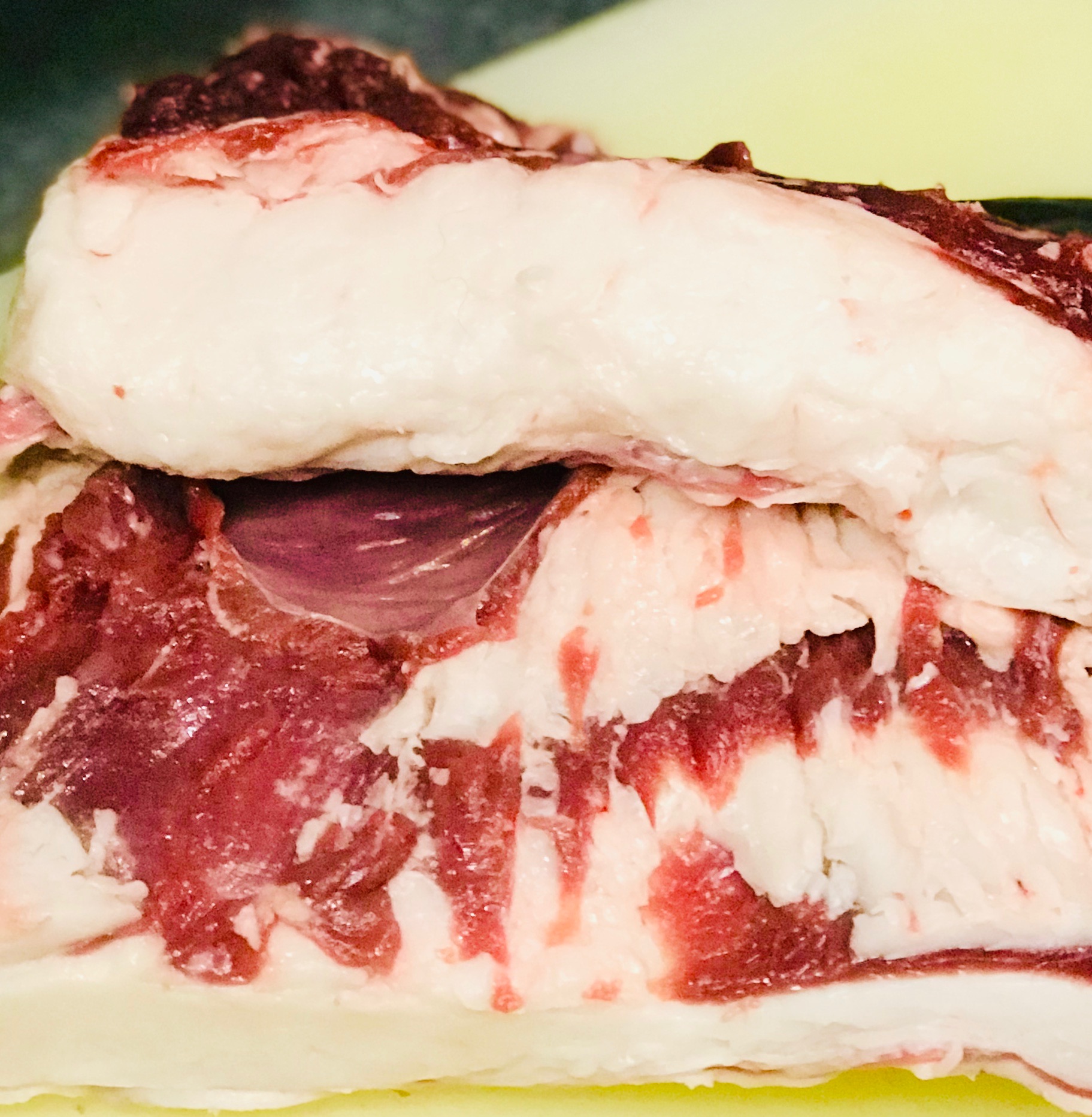
If you asked me which gibier tastes best, I would say badger — anaguma in Japanese.
The reason is the fat. We buy around 100 badgers a year from ten hunters in Hiroshima, Okayama, Nagasaki, Kumamoto, Nagano and Fukuoka. Having worked through that number every year, what I can tell you is this: the sweetness of badger fat is not simply “what this meat is like”. It is decided almost entirely by what that particular animal ate, and when it was taken.
This article is about that.
Why badger fat tastes sweet
People call it sweet, but there is no sugar in the fat. There are two reasons for the impression.
What the animal eats becomes its fat, directly
In ruminants such as cattle and deer, microbes in the stomach rework the fat in the feed before the body stores it. What the animal ate therefore shows up only faintly in the quality of its fat.
A badger is a mustelid with a single stomach. The fat in what it eats goes into its body without being reworked. It is the same reason the fat of acorn-fed Iberian pork is treated as something special: pigs and badgers both belong to the side of the animal kingdom where diet shows up in the fat as it is.
Sugar from fruit builds fat with a low melting point
A body that has eaten a great deal of something sweet builds fat out of that sugar, and what it builds is low-melting fat such as oleic acid. A low melting point means it melts at a low temperature. Fat that begins to loosen around body heat flows the moment it enters your mouth and releases its aroma all at once.
What we are registering as sweetness is the speed of that melt, plus the clean aroma of fat that has not oxidised. We receive it as sweet.
In practice, when an animal is well fattened, the fat starts melting from the heat of your fingers as the knife goes in. You can feel it while butchering.
This fat is the good part. The loin is almost entirely fat, and we put it into sukiyaki and other hot pots.
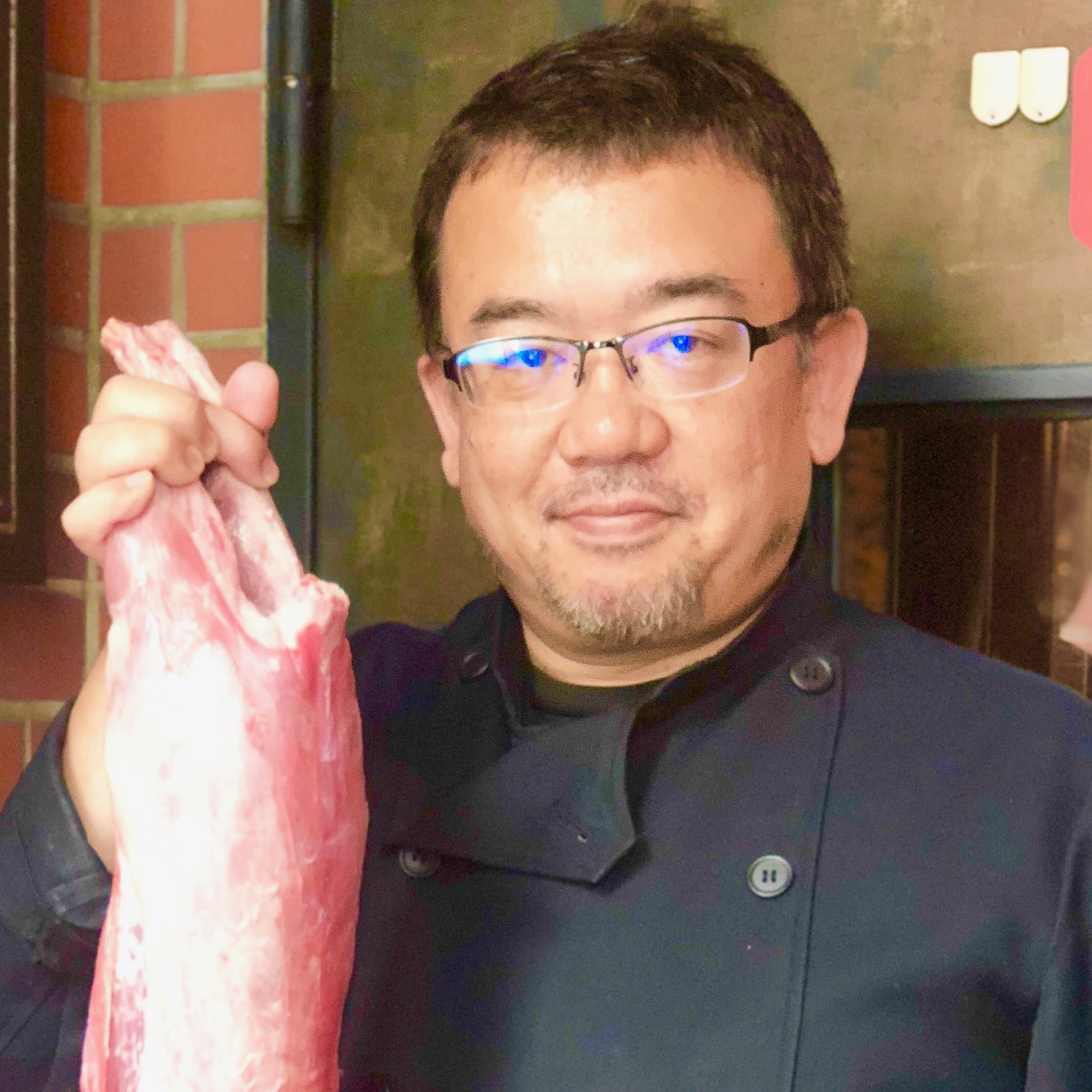
Badgers are taken in orchards: the fruit relay from late August to December
Badgers like fruit trees, and they raid orchards. That is why they are culled as pest animals — and it produces a reversal: the animal that was a nuisance in the orchard is the better one on the plate.
Japan’s Ministry of the Environment published a distribution survey in 2022 (covering FY2018–2021) reporting that badger distribution has expanded in the Kinki region, Kyushu and around the Tokyo metropolitan area, with records from almost all of Kyushu. This is understood to reflect capture data gathered to prevent agricultural damage (*). The badgers that reach us from the fruit-growing areas of western Japan come out of that same picture.
The orchards our animals come from shift with the season.
| Period | Fruit being raided | Condition of the fat |
|---|---|---|
| From late August | Kyoho grapes | Fat begins to build |
| Around September | Figs | Filling out |
| Autumn | Shine Muscat grapes | Good |
| Late autumn | Persimmons | High sugar, and the fat at its fullest. The best animals of the year |
| Through December | Mandarins | — |
* Ministry of the Environment, “Results of the distribution survey of raccoon dogs, foxes and badgers” (published 30 September 2022)
It is not that the species of fruit changes the flavour enormously. What changes is the timing of the catch, and with it how much fat the animal carries. Persimmon-season badgers are good because persimmons are high in sugar and because that point in the year coincides with the animal laying down the most fat before hibernation.
Badgers are also culled in melon fields in summer, but animals taken then carry no fat, so we do not buy them. We do not buy an animal simply because it was caught.
When badger is in season
Fat starts to build after mid-August, and autumn and winter are the season.
You will hear it said that only November and December, right before hibernation, will do. But taking delivery every year, I find the Kyoho-grape badgers of late August already carry plenty of fat. Conversely, a melon-field animal in summer has none, even when one is caught.
In other words, the badger season is built less on the hibernation calendar than on the order in which fruit ripens.
How much meat comes off one animal
- Weight: 4kg to 15kg (they vary a great deal)
- Edible portion: around 70%, because so much of it is fat
This is not meat that arrives in quantity the way venison or wild boar does. We buy them one animal at a time. From those 100 animals we serve about 3,000 badger dishes a year, which is a lot for a specialist restaurant — but split between two restaurants, it is not an ingredient we have in abundance at any given moment.
I used to get this wrong
When I started working with badger, I bought anything that was a badger.
The result was that I sometimes bought animals that smelled gamy, and others with little fat and no depth of flavour. The same species becomes a completely different meat depending on what it had been eating up in the hills.
Now I aim at orchards and buy only animals whose diet I know. That is why the badger we serve is reliably good.
How we serve it, and why
Kakuni (slow-braised belly): 2 hours’ first simmer, 5 hours’ braise
About two hours of initial simmering, then five more hours of braising to take the seasoning in — seven hours in total. All that time is there to bring the badger’s thick fat to the point where it melts. It collapses when you touch it with chopsticks. What we hear most about this dish is “I never liked fat, but I’d order this again”.

Tataki (low-temperature seared): 65°C for 60 minutes
Cooked at a controlled low temperature: 65°C for 60 minutes. Take it any further and that low-melting fat runs out of the meat. The temperature and the time exist to keep the smooth sweetness in place.
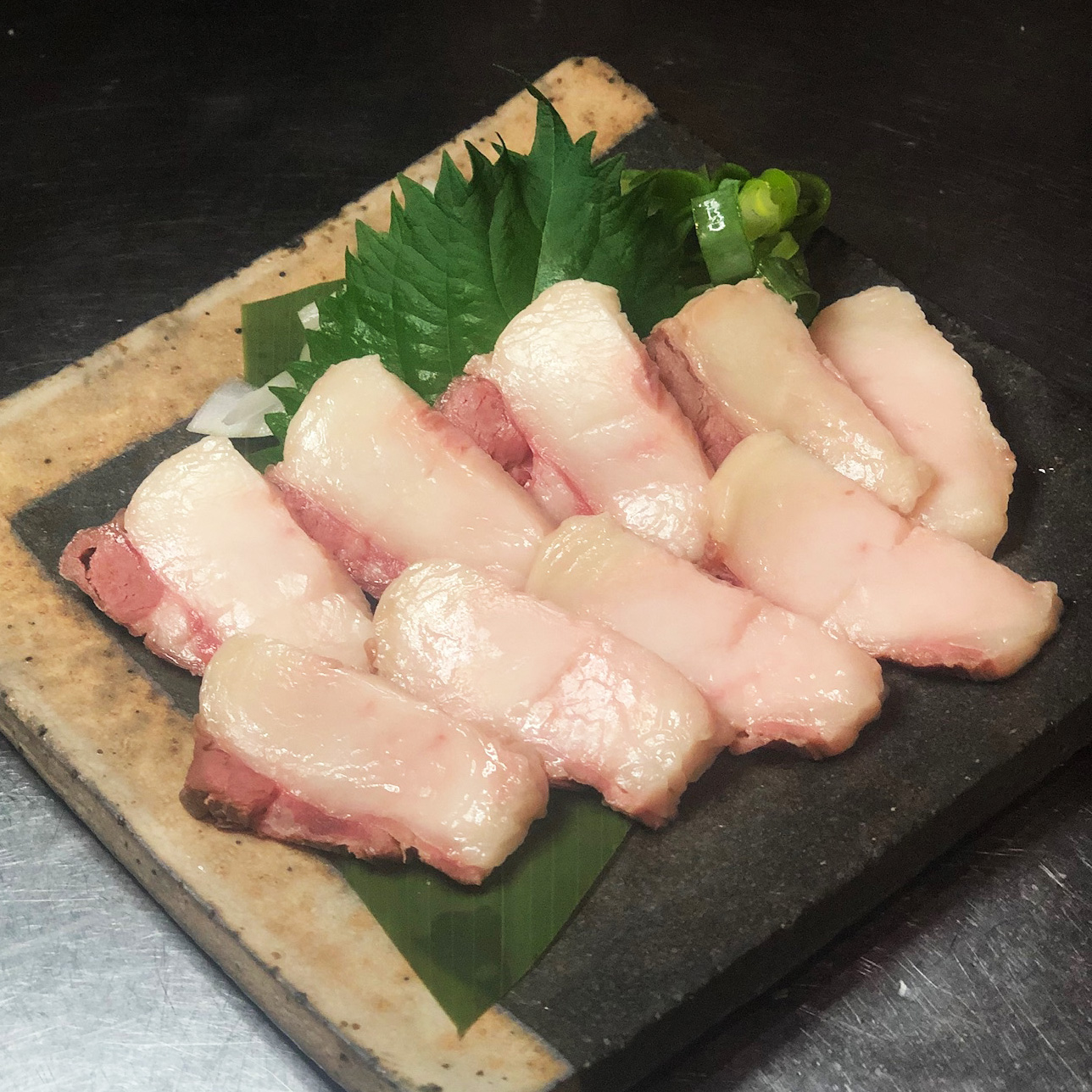
Sukiyaki
The moment the fat melts in the iron pan and catches the sauce is where you meet badger most directly. The vegetables take on the flavour too.
Charcoal-grilled
For this we pick animals with a moderate amount of fat — early-autumn ones, or animals that have been eating a lot of orchard fruit.
Chilled fat
Fat prepared at a low temperature, then chilled thoroughly and served cold. It is a dish for tasting that sweet fat on its own terms.
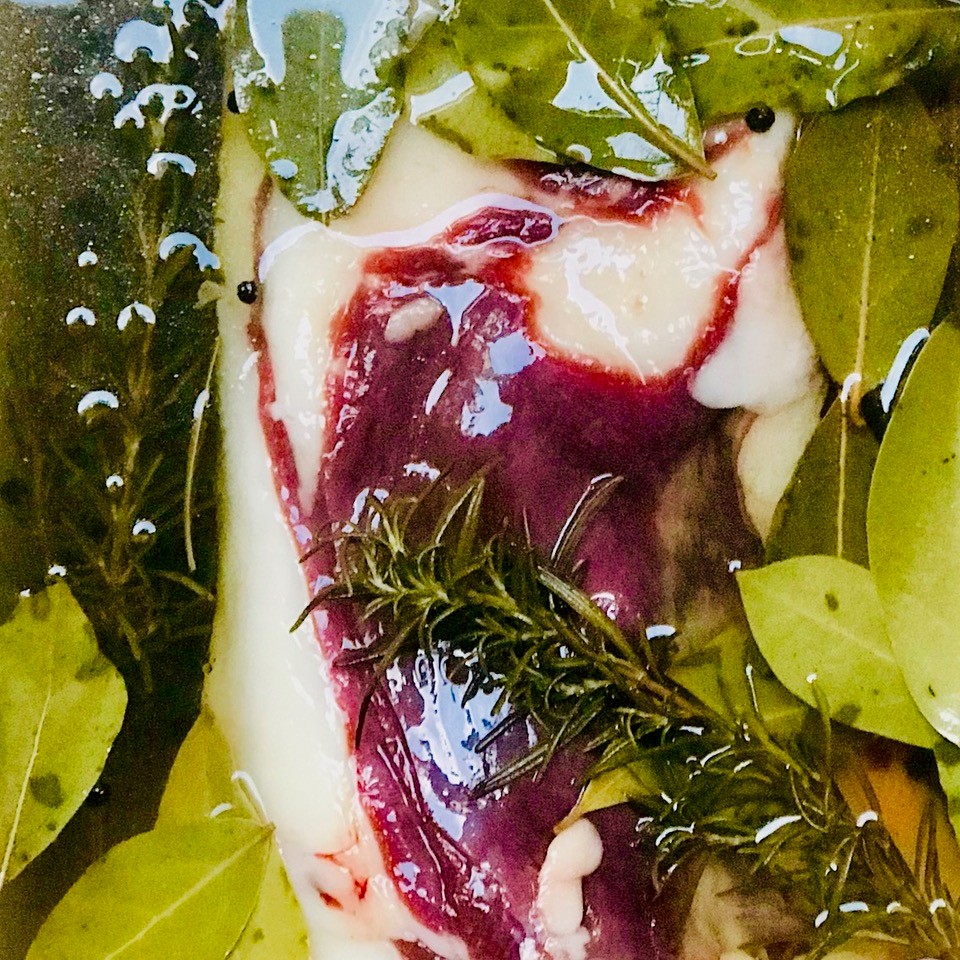
Bacon
The curing takes time as well. Smoked, badger fat gives up a different aroma again.
What guests say most often
“The fat just melts.”
“There’s so much fat, and yet it eats so clean.”
Those two. Guests arrive braced for the amount of fat, and say this afterwards. The low melting point turns straight into their verdict.
A badger is not a raccoon dog
Badgers and raccoon dogs (tanuki) look enough alike that Japanese has long lumped them together in the phrase “raccoon dogs of the same hole”. They are entirely different animals: the raccoon dog is a canid, the badger a mustelid. As meat, the difference that matters is the one above — whether what the animal ate shows up in its fat. Our Japanese article 穴熊の生態・習性や肉の特徴をジビエ専門店の店主が詳しく紹介 covers the animal itself in more detail.
An aside: “dachshund” means badger dog
The name comes from German: Dachs is badger and Hund is dog, so a dachshund is a badger dog. The long body and short legs are said to have come from breeding dogs to hunt badgers in their burrows. Badger has evidently been known as good eating in Germany for a very long time.
You can touch a badger at the restaurant
We keep a badger pelt on display. Photographs do not convey how stiff and thick the fur is, so please feel it when you visit.
Food safety: licensed facilities and controlled cooking
In Japan, the meat of wild birds and animals must pass through a licensed meat processing facility before it can be distributed. The badgers we buy are no exception: they all come from licensed facilities.
Everything we serve is thoroughly cooked before it reaches the table. The seven hours a kakuni takes, and the 65°C for 60 minutes of the tataki, are controlled cooking times and temperatures. Wondering about safety when you eat wild meat for the first time is reasonable, so we would rather state it here.
The courses that include badger
Anaguma Zukushi course (nine dishes): badger rillettes, Ezo deer pâté de campagne, tataki salad, charcoal-grilled badger, kakuni, sukiyaki hot pot, Inaniwa udon to finish, and lingonberry and rosehip ice cream. One animal, served through a range of different heat treatments — the smooth sweetness of the tataki, the char of the grill, the way the long-braised kakuni gives way — set side by side.
Shifuku Gourmet course (eight dishes): badger sukiyaki plus brown bear braised in red wine. This is our most popular course, and the one to choose if you want to try several animals in one sitting.
Prices and contents change with what comes in, so please check the booking page for current details. If bear is what brought you here, see our English article What Is Bear Meat? Taste, Smell, Season and How to Choose It.
How to reserve (English, online)
We are reservation-only and serve set courses, so please book in advance; a single extra dish can be added to a course if you ask when booking. Tabelog, Japan’s largest restaurant site, has an English version, and you can book there without any Japanese. You are also welcome to call: Ningyocho 03-5640-2121, Asakusa 03-5828-6788.
Restaurant information
Amakara Kumakara — Asakusa
- Address: 1-20-5 Asakusa, Taito-ku, Tokyo 111-0032 (1 minute on foot from Kaminarimon)
- Phone: 03-5828-6788
- Hours: Mon, Wed–Sat 17:00–22:30 (last order 21:30) / Sun and public holidays 17:00–22:00 (last order 21:00)
- Closed: Tuesdays, 31 December and 1–3 January
- Seats: 52 (tatami seating, sunken-table seating, counter)
Amakara Kumakara — Nihonbashi Ningyocho
- Address: Okawa Building 2F, 3-7-11 Nihonbashi Ningyocho, Chuo-ku, Tokyo 103-0013 (1 minute on foot from exit A5, Ningyocho Station, Tokyo Metro Hibiya Line)
- Phone: 03-5640-2121
- Hours: 17:00–22:30 (last order 21:30)
- Closed: Sundays and public holidays
- Seats: 20 (including sunken-table private rooms)
About the author
This article was written by Ikuo Hayashi — Representative Director of the Bear Meat Utilisation Research Institute (a Japanese general incorporated association), gibier critic, and owner of the gibier restaurant Amakara Kumakara.
He entered the restaurant trade in 1987 and opened his own place in Nihonbashi Ningyocho, Tokyo, in 1996, incorporating as Tina’s Dining Co., Ltd. in 2000. Today he runs Amakara Kumakara, where guests can eat bear, deer, wild boar and wild birds, and Ramurenkayne, where Ainu dishes are served alongside Ainu cultural traditions. His restaurants have been featured on television programmes including TBS’s Love it! and NHK’s NHK Special, and in newspapers and magazines such as Nikkan Sports and Otona no Shumatsu.